Technical high schools from Innsbruck, Bolzano/Bozen and Trento
02-06.03.2026
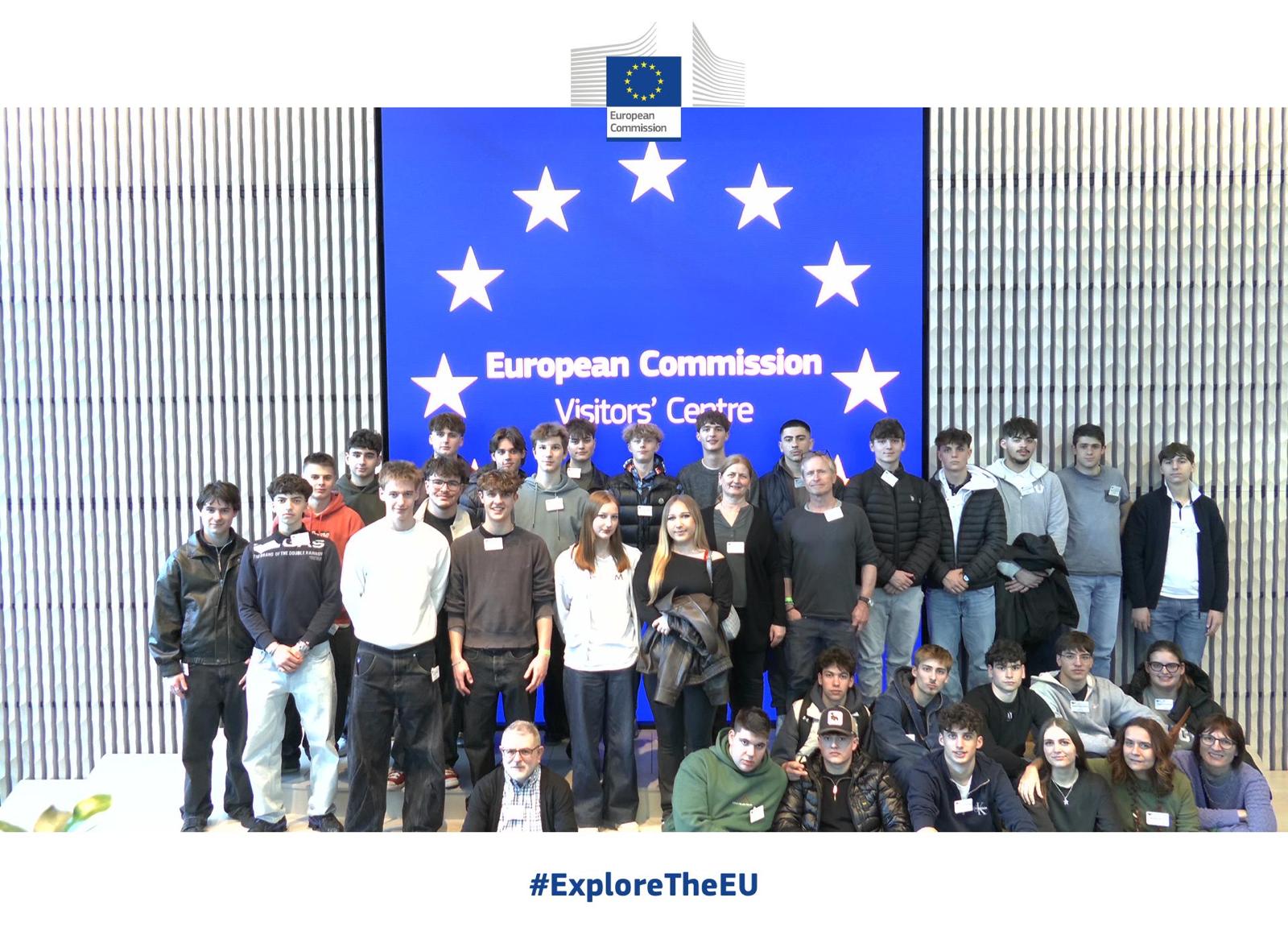
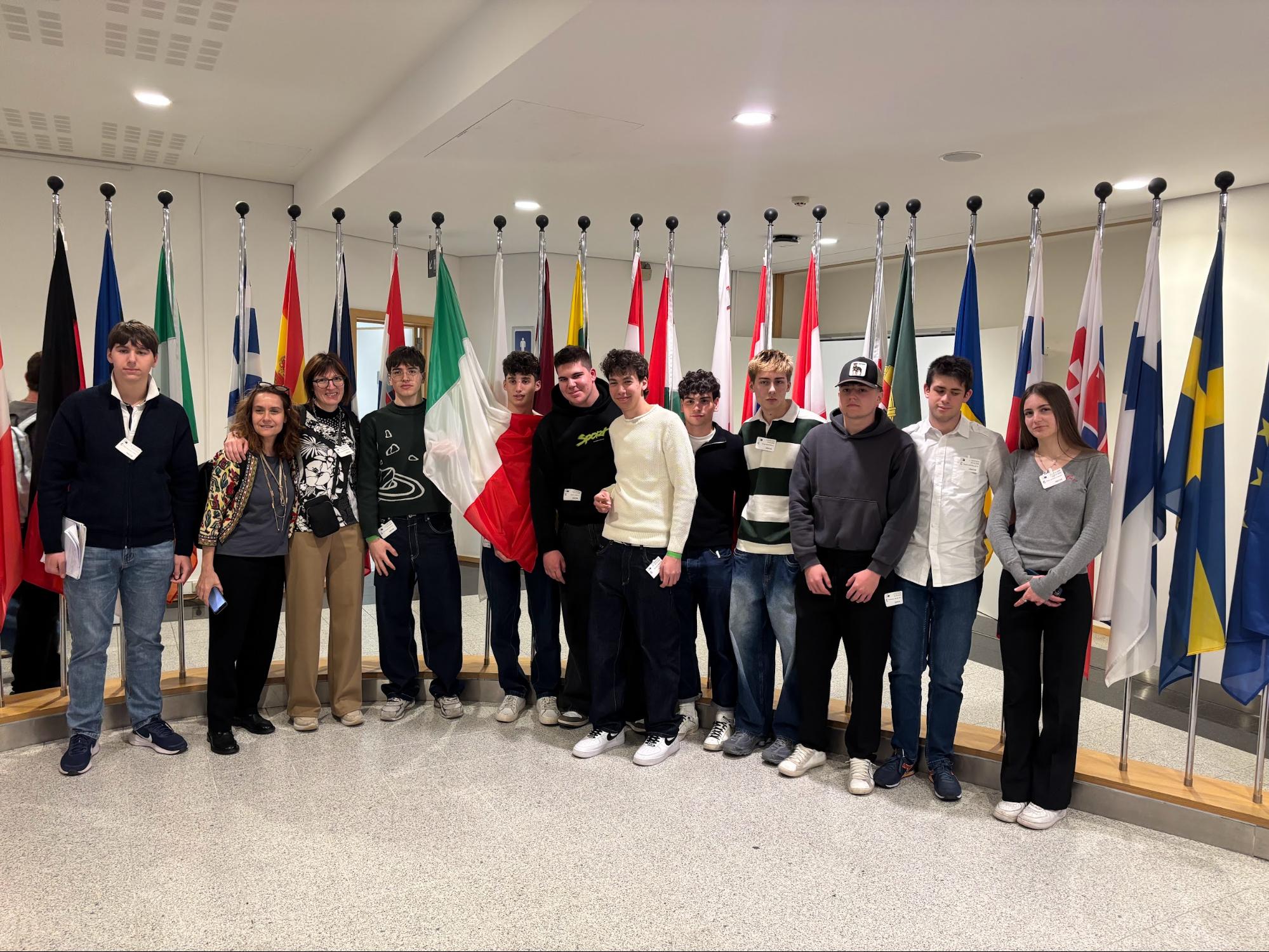
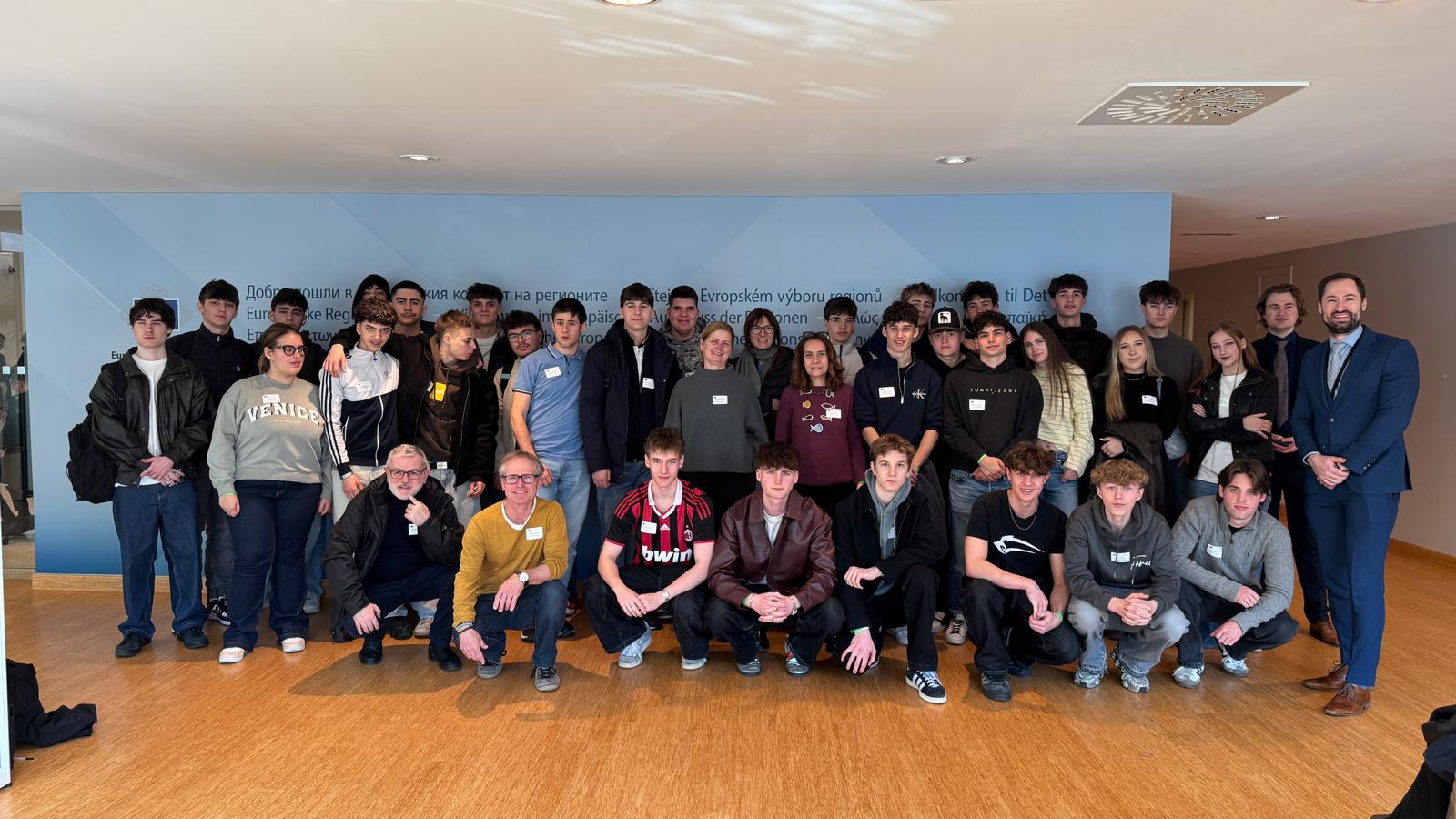
Within the framework of the Erasmus+ programme, students from ITT Buonarroti in Trento recently embarked on an international journey through a school education group mobility project in Brussels. This initiative brought our school into close collaboration with the Competence Center HTL Anichstrasse from Innsbruck and the Istituto di Istruzione Secondaria Superiore “Galileo Galilei” from Bolzano. Together, these institutions formed an intercultural group of thirty students belonging to the Euregio European Region, including ten outstanding individuals from our own fourth-year classes representing various fields of study.
The journey began well before departure through two meaningful online preparatory meetings that laid the groundwork for solid transnational cooperation. During the first introductory session, the students and schools presented themselves and planned their upcoming work, while the second meeting allowed the participants, working in mixed teams, to present their research and insights into the core topics they would later explore on the ground in Brussels.
This whole educational path has yielded profound benefits for the personal and academic growth of our students. Working in an international context allowed them to significantly enhance not only their digital and multilingual skills but also vital soft skills for their future, such as critical thinking, creativity, negotiation, flexibility and conflict resolution within a team. In addition to enriching their cultural background by discovering the host country, the students developed greater independence, a strong sense of responsibility, and a tangible awareness of European citizenship, while also identifying significant future study and career opportunities within the European Union.
The report continues below with the travel journal and daily reflections written directly by the participants of this adventure. The experience culminated in a final workshop where the students collaborated to create multimedia products celebrating the success and lasting value of this precious cross-border synergy.
Monday, 2nd of March
Welcome & Introduction session
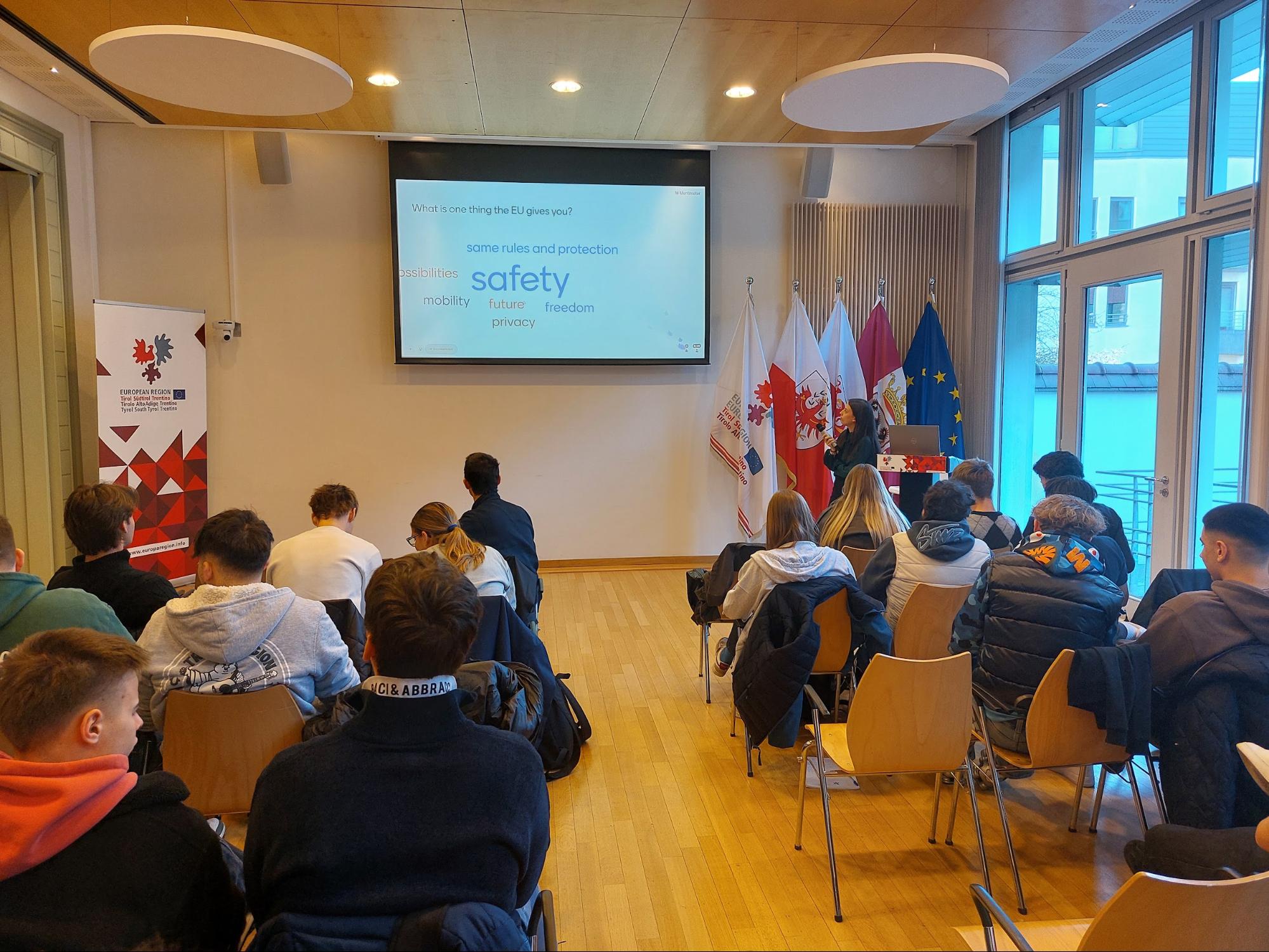
In the welcome activity we saw some presentations about Europe, what we are going to do and see during the residency in Brussels.
We had the opportunity to meet the other students from Bolzano and Innsbruck, but also we met some people who work inside the European institutions.
They talked about the advantages, possibilities and opportunities of Europe and also how all the commissions work.
Francesco Mereuta, Giacomo Leonardi
Visit to the European Commision
Then, after the lunch break, we went to visit the European Commission. There we assisted with some presentations about Renewable energy and how the European Union is working on to, the other one is instead about what happened in the commission and his role and importance.
Evan Martinelli, Riccardo Sorce
Experience Europe
Last but not least, they took us to another building for try an interactive experience with the topic of EU. In there we could find some couches with a VR for a full immersion experience in what’s good Europe brings. Beside that, there were also some tablets for doing some research and games obviously with the topic the European Union and there were some touch screens to see some aspects of the administration of the Union.
Francesco Bottura, Francesco Mereuta
Tuesday, 3th of March
Towards the European Parliament
During the morning of the second day of our stay in Brussels, we met Markus Warasin, Head of Unit at the General Secretariat of the European Parliament. It was a valuable opportunity to better understand how the structure of the Parliament and other European organizations actually works. Institutions often seem complicated, but seeing them up close helps us understand how fundamental they are for our future.
Francesco Mereuta, Giacomo Leonardi
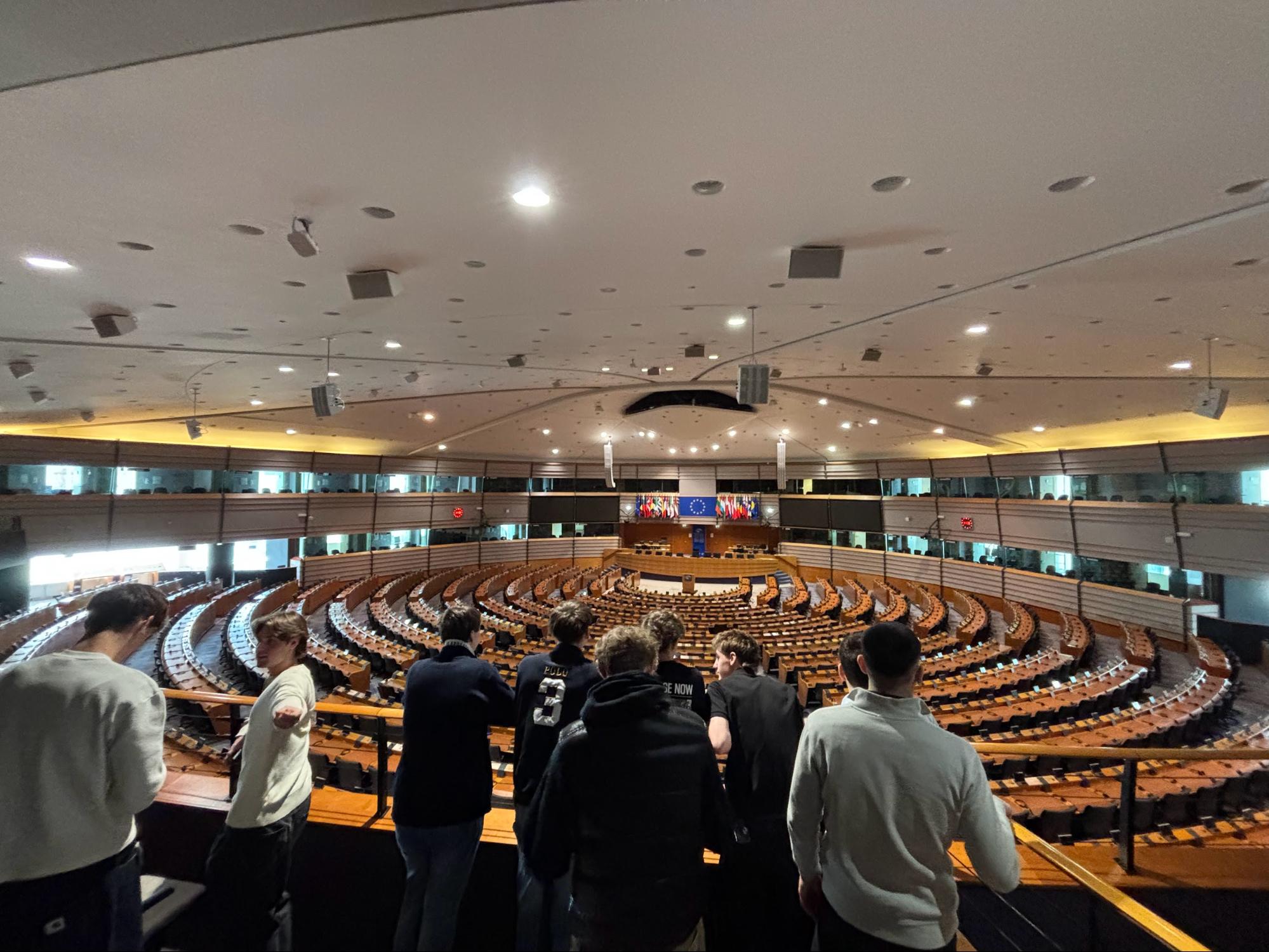
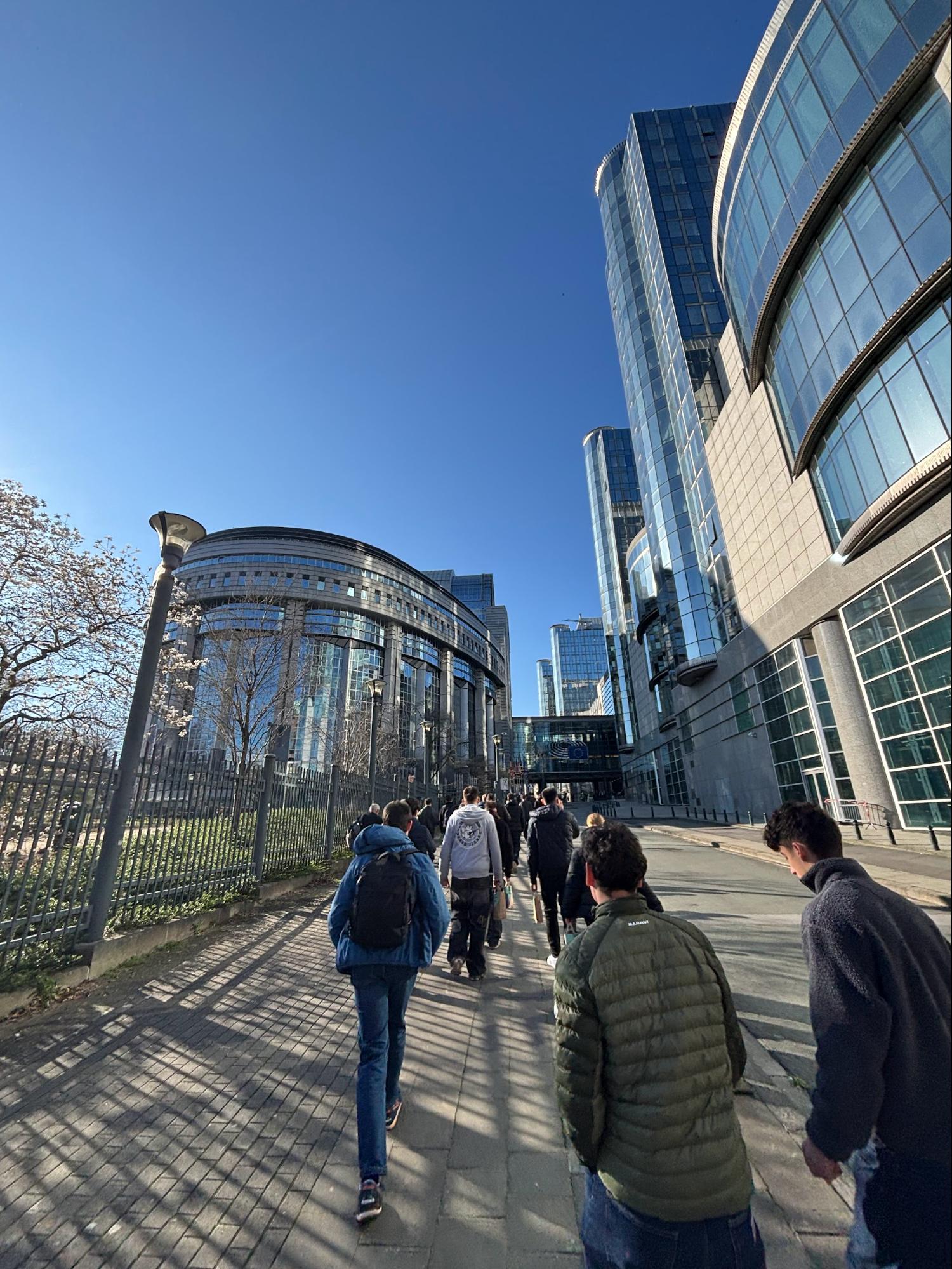
Visit to the European Parliament
Speakers: Barthet Janet, Herbert Dorfmann
After all the checks at the entrance, we went into a room and Janet started explaining the EU Values, the Russian aggression against Ukraine, the EU decision making and what the EU does.
After that a member of the Parliament, Herbert Dorfmann, came to explain to us his career and it was really interesting seeing how someone from Tyrol became someone so important. The most relevant aspect that i will remember from this day is that anyone can become someone important, as long as they are keen to represent their region and fight for their beliefs.
Robert Concal
Visit to Parlamentarium
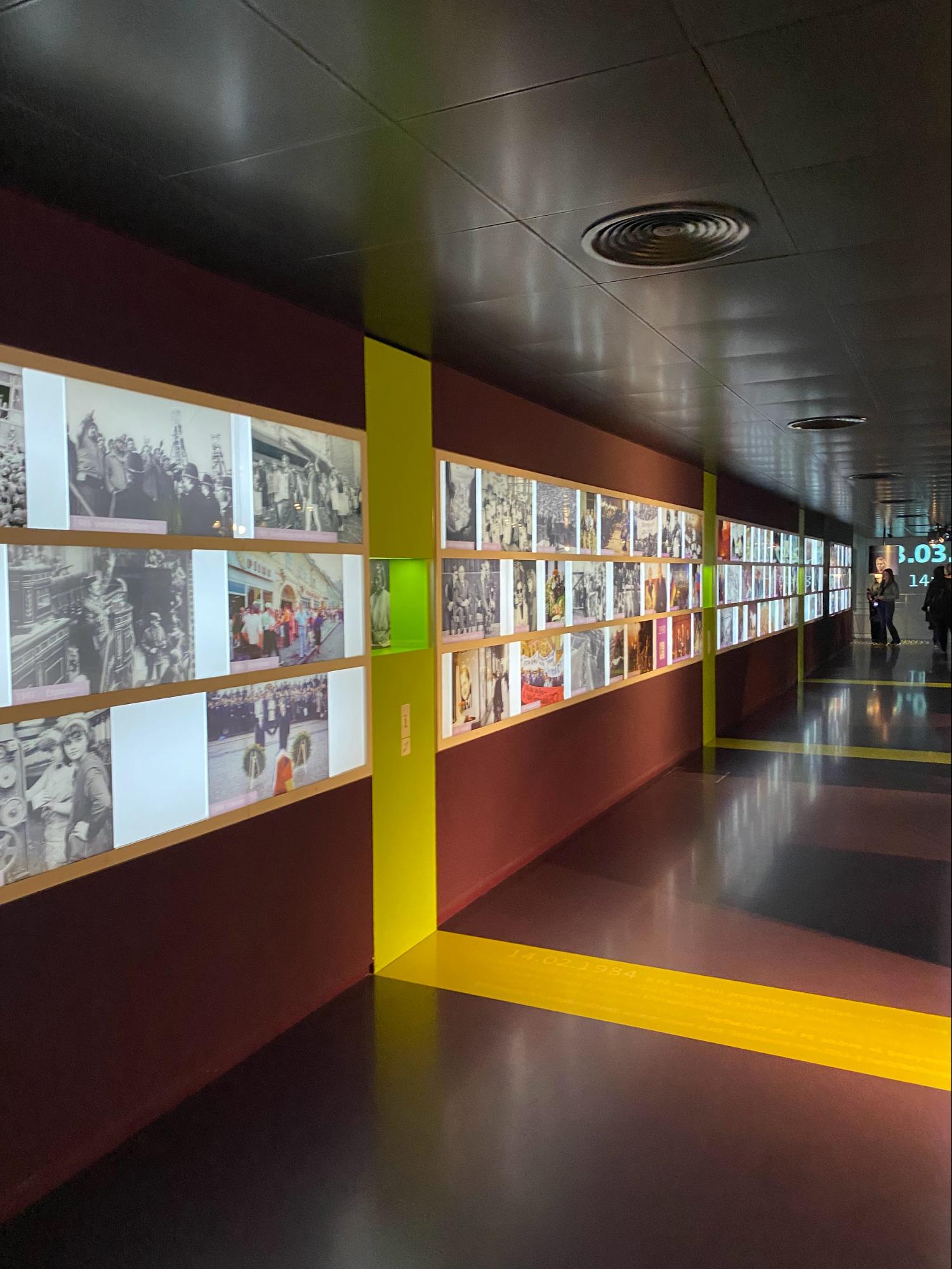
During the parlamentarium visit we were able to learn the history of Europe from its start to nowadays, covering the key events that shaped the continent. Through interactive exhibits and immersive displays, we explored the aftermath of the World Wars, the fall of the Iron Curtain, and the gradual process of integration that led to the creation of the European Union. It was a fascinating journey through the political, social, and cultural milestones of our shared heritage. We discovered how a continent torn apart by war managed to build a future based on peace and unity. The visit provided a clear and engaging overview of the challenges faced by past generations and the common goals that continue to unite European citizens today.
Riccardo Sorce, Virginia Muraro
Wednesday, 4th of March
European Committee of the Regions
The Evolution of the European Union: Education, Energy, and Integration.
The European Union has undergone a massive transformation, moving from early mobility initiatives to a modern, sustainable powerhouse. A major milestone in education was the Bologna Process, which standardized the "3+2" university system (Bachelor’s and Master’s) across Europe. This paved the way for the iconic Erasmus program, which began in 1987 and evolved into Erasmus+ in 2014, expanding its reach to include not just students, but also trainees, youth, and sports. These initiatives, alongside tools like EURES, have been fundamental in creating a truly mobile European workforce and a shared cultural identity.
Cesare Fraccaroli, Sedric Lunelli
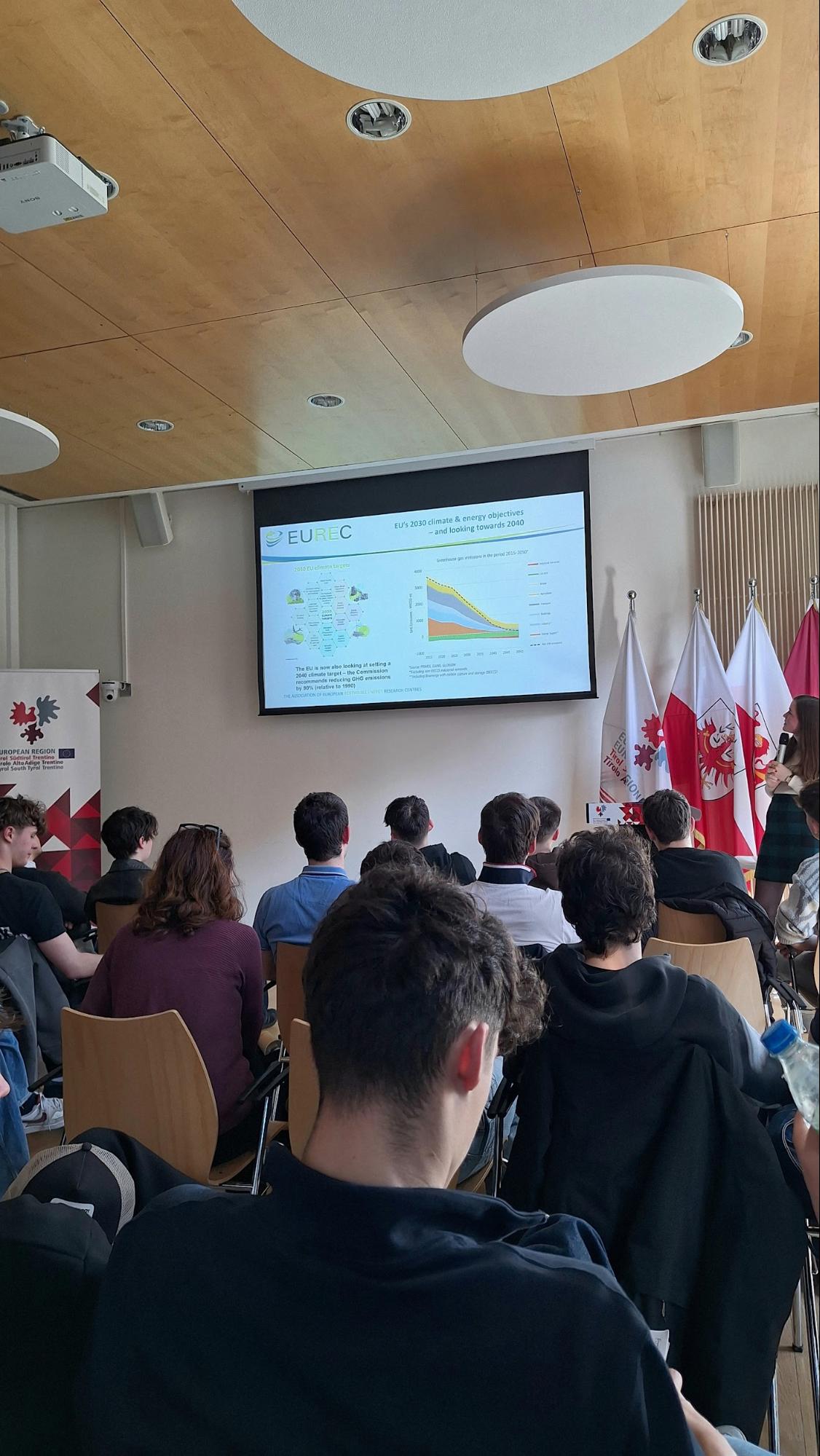
Thematic session on Renewable energies
Beyond education, the EU’s current priority is a radical shift toward sustainability and energy independence. The data shows a clear trend: between 2019 and 2023, renewable energy use rose from 14% to 20%, while coal consumption dropped significantly. Even more impressive is the shift in electricity production, with renewables expected to reach 45% by 2025. This green transition is also a matter of security; the EU has drastically reduced its dependence on Russian energy, with imports falling from 45% in 2021 to just 12% in 2023, while wind and solar power are now overtaking fossil fuels.
At its core, the EU remains an institution dedicated to improving the daily lives of its 450 million citizens across 27 countries. Led by the European Commission—composed of a President and 26 Commissioners—the Union ensures essential benefits we often take for granted, such as the free movement of people, healthcare abroad, and the abolition of roaming charges. From strict food safety standards to toy safety rules, the EU acts as a regulatory shield that promotes both quality of life and environmental responsibility on a continental scale.
Evan Martinelli, Giacomo Leonardi
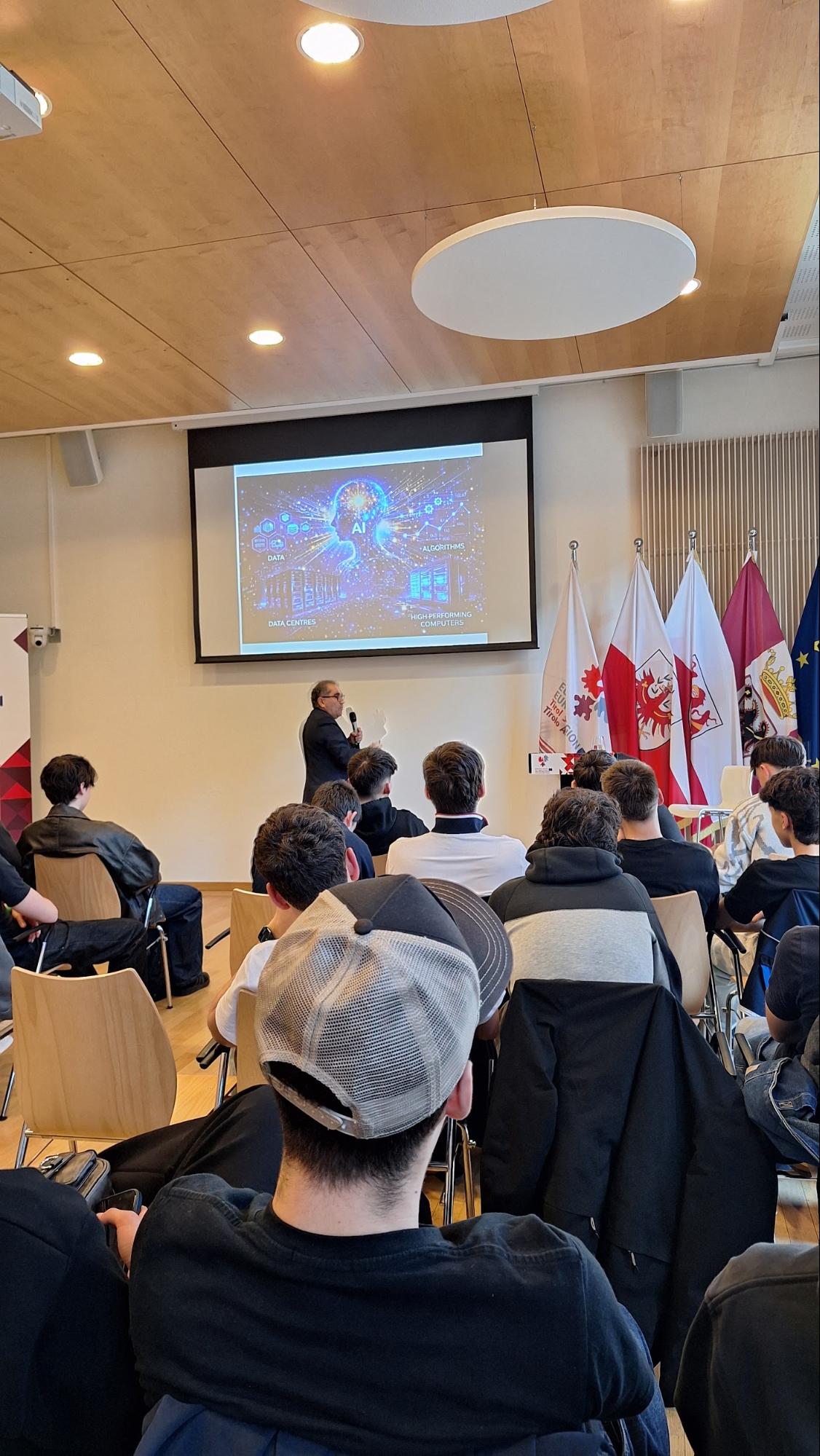
Thematic session on IA
In this thematic session on AI, Vittorio Calaprice told us that the European Union thinks that AI is a very good tool, but it needs to be used in a good and right way.
He told us that AI is a field of computer science, focused on creating machines and computer systems.
In AI there are 4 main pillows, which are:
DATA: imagines, text, videos
DATA CENTER: it organises massive datasets
ALGORITHMS: set of mathematical instructions
HIGH PERFORMANCE COMPUTING: supercomputers that can do millions of calculations at second
EU is investing on AI, and the strategy is:
strong AI infrastructures
innovations
development of skills and talent
Francesco Bottura, Francesco Mereuta
Thursday, 5th of March
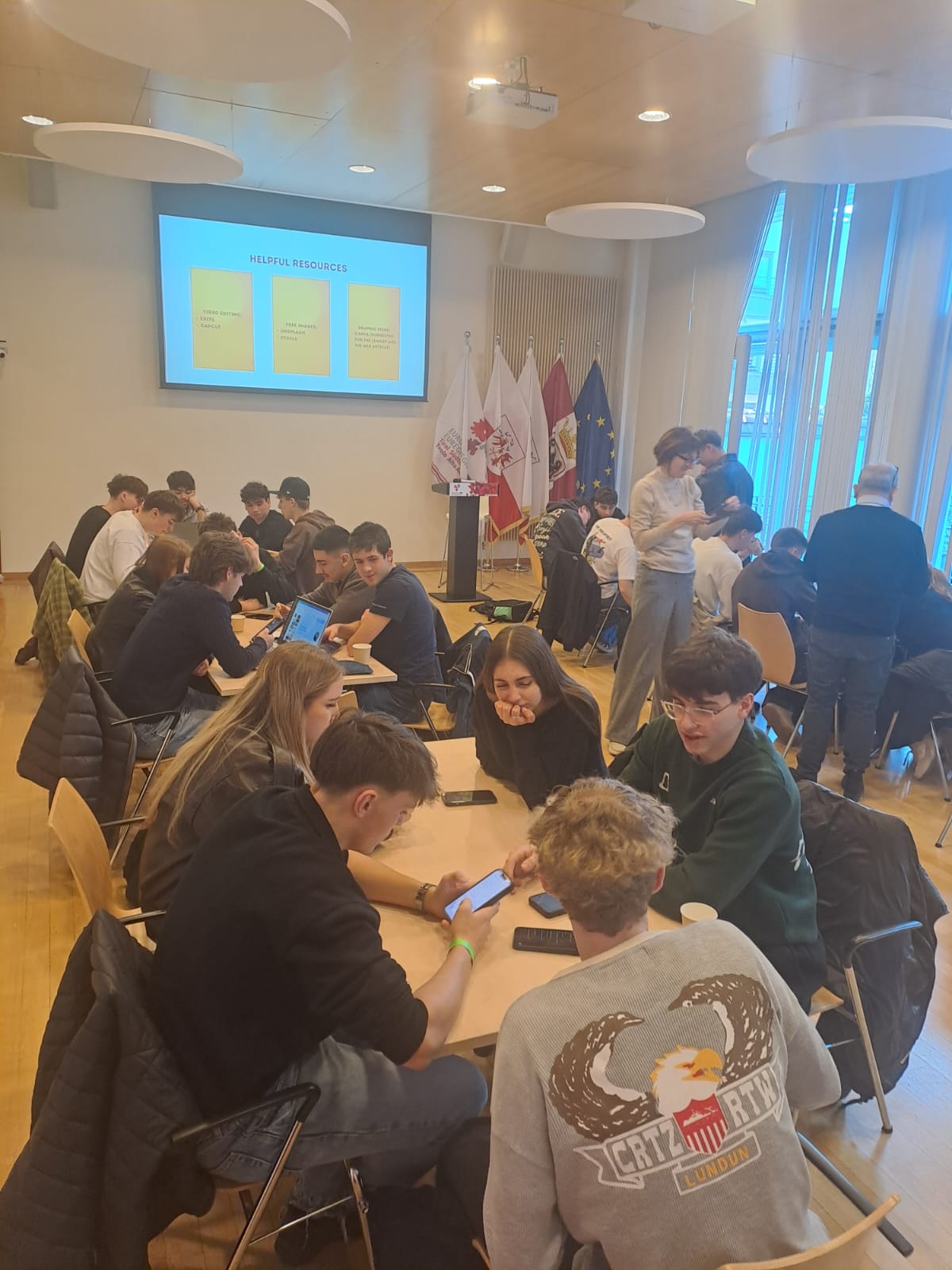
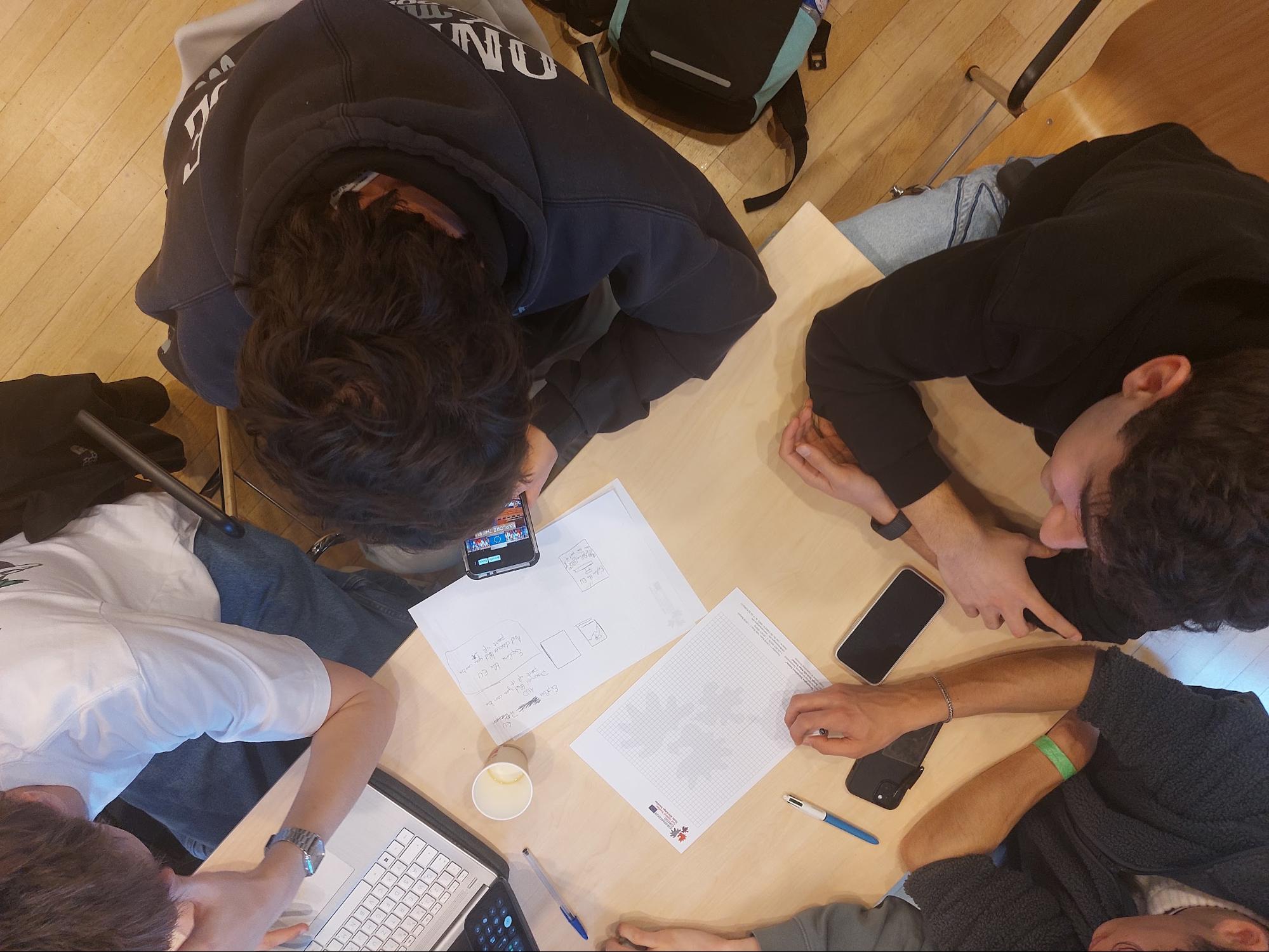
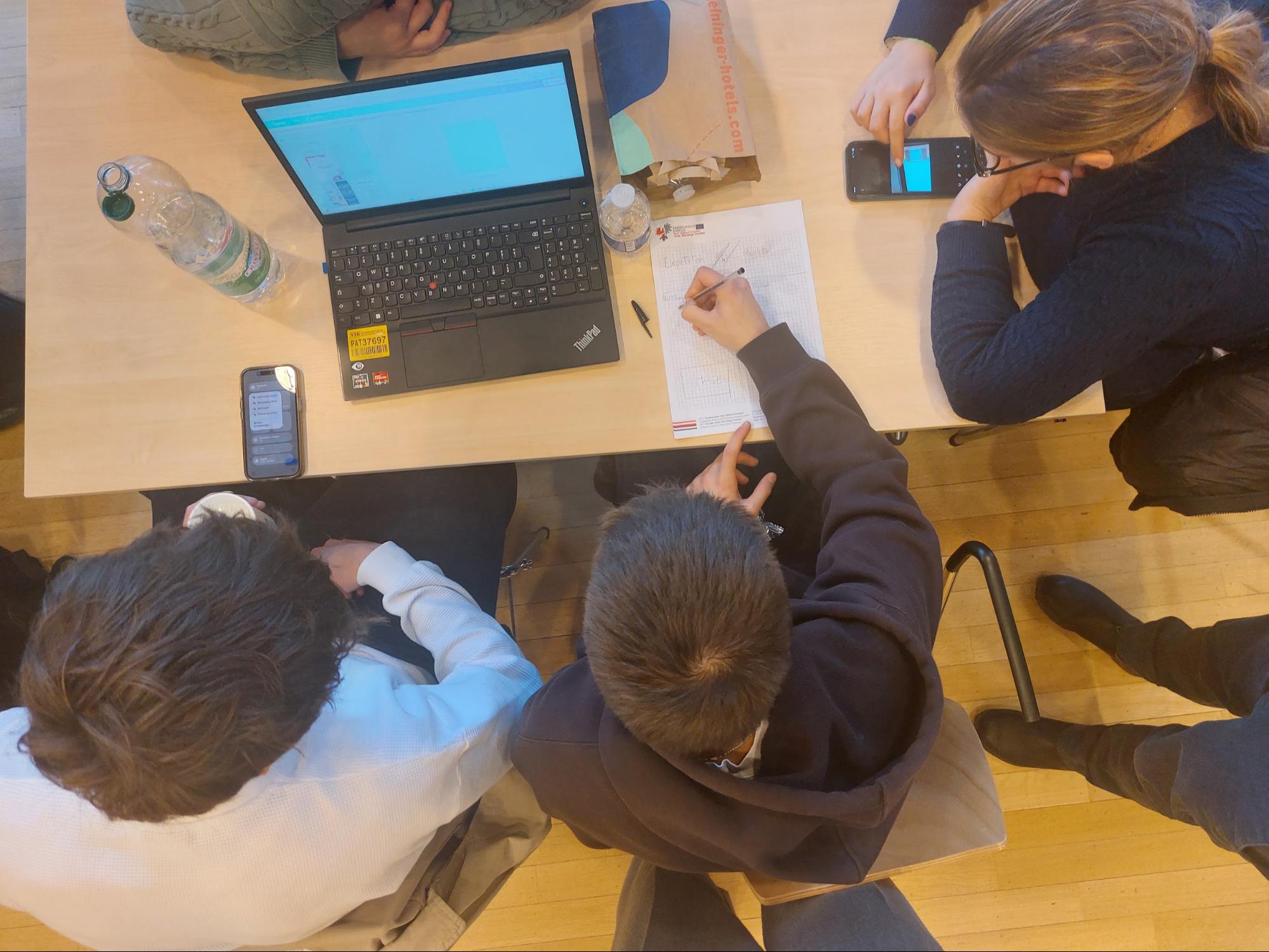
We spent the last day reflecting on our journey along the EU institutions, challenges and history. Working in groups, we explored and experimented communication and dissemination practices.